
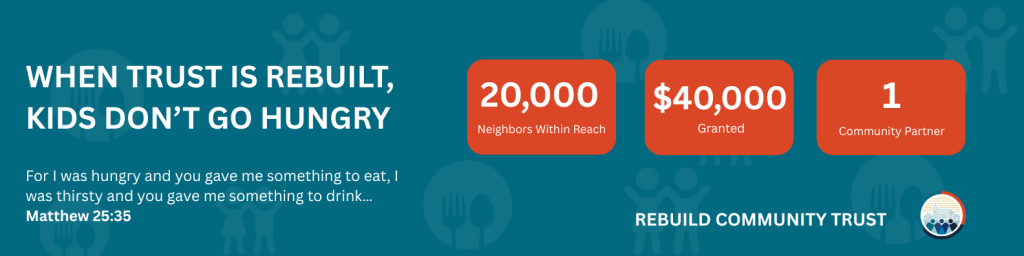
When a church says yes to someone else’s vision, it can quietly change everything.
Key Takeaways
- Christ Church of Longboat Key gave a $40,000 grant to fund a permanent meal-packing facility for hungry kids.
- The partnership supported a local nonprofit (EFELT) that had been serving in borrowed spaces for years.
- The church prioritized faithfulness over flash—supporting an existing vision rather than launching a new one.
- The gift created infrastructure, stability, and dignity for volunteers and kids alike.
- It models how churches can build trust and impact by coming alongside, not taking over.
“Learn to do right; seek justice. Defend the oppressed. Take up the cause of the fatherless; plead the case of the widow.” — Isaiah 1:17
A Quiet Gift that Changed Everything
Sometimes closing a gap doesn’t look like a grand campaign or a viral moment. Sometimes it looks like a quiet vote, a generous check, and a simple “yes” to someone else’s vision. That’s exactly what happened this spring at Christ Church of Longboat Key. For years, the church supported Elks Feeding Empty Little Tummies (EFELT)—a local nonprofit making sure kids don’t go hungry on the weekends. They’ve packed food bags, offered insurance help, and stayed faithful in the background. But in May, something shifted. The church awarded EFELT a $40,000 grant, allowing them to build a long-awaited permanent meal-packing center on the property of Bradenton Elks Lodge No. 1511. Andrea Hitcho, EFELT’s president, shared: “I would be lying if I said I didn’t tear up when Jerry told me we got the grant. We were trying to raise $54,000. That grant changed everything. It means we can build right away.”
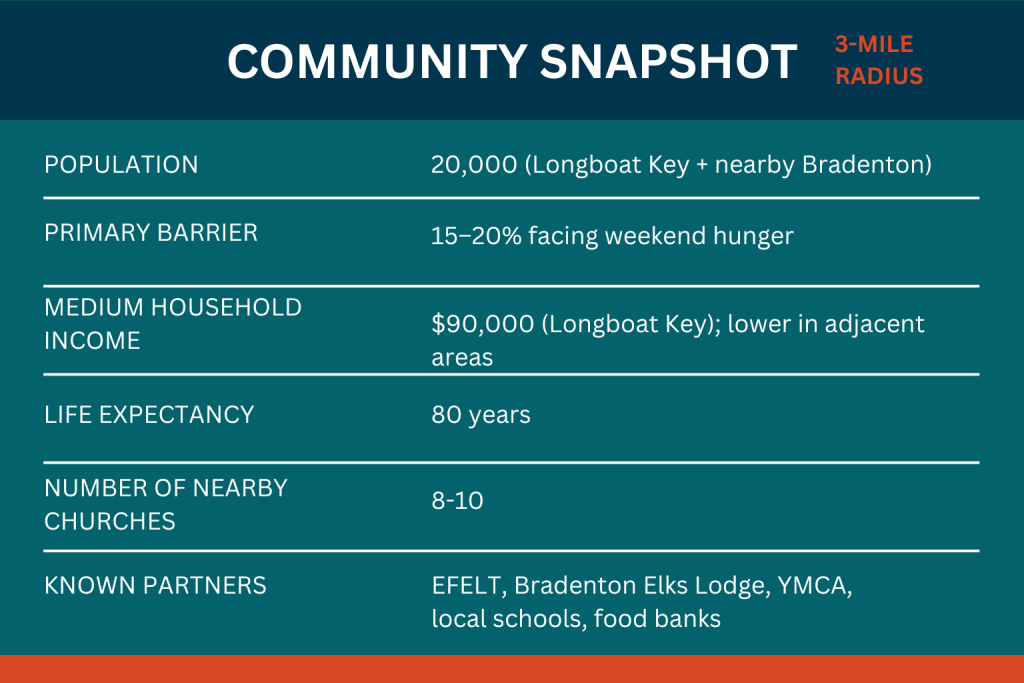
Bridge-Building
For years, EFELT’s work has been sustained by the generosity of volunteers and temporary spaces—ballrooms, storage rooms, YMCA buildings. It worked. But it wasn’t sustainable. Packing meals for 500+ kids every weekend without a permanent space meant always living one move away from disruption. This gift changed that. It didn’t just cover a need—it built stability. It told EFELT: We see you. We believe in you. We want to help carry this with you. And here’s what matters most: it wasn’t flashy. It was faithful. A local church didn’t try to reinvent the wheel. They saw who was already doing the work—and helped make the path more permanent. In doing so, they closed a gap between what’s often promised and what’s tangibly provided.
Let’s discern what rebuilding trust might look like in your context
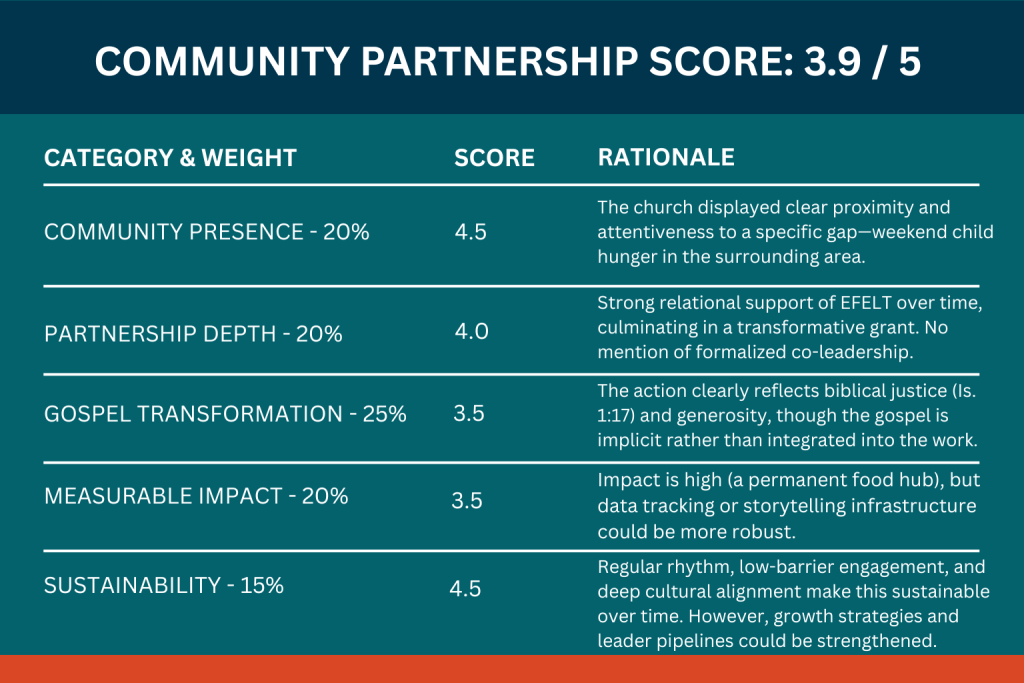
Try These Steps
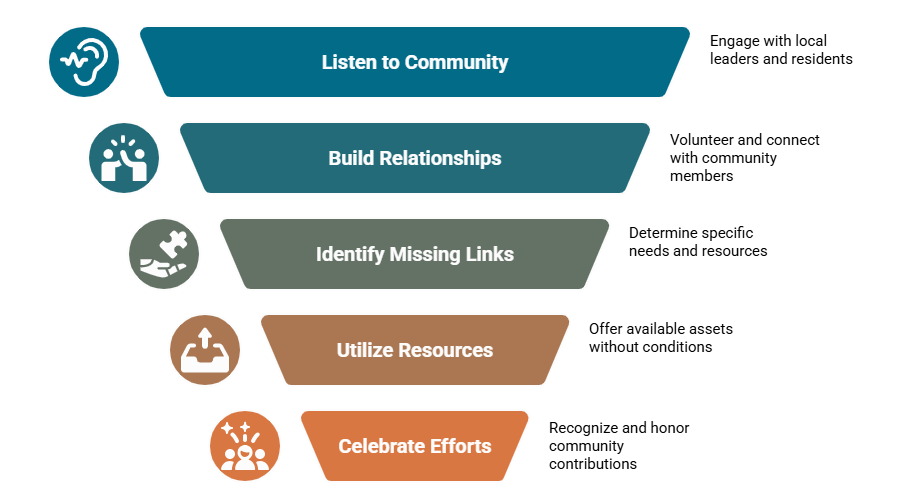
5 Gentle Steps for Churches Looking to Bridge Local Gaps
- Start with Listening Who’s already loving your community well? Ask how you can support—not lead.
- Invest in Relationship Before Solutions Show up. Volunteer. Deliver meals. Get to know the mission before trying to fix it.
- Identify the Missing Link Is it a truck? A fridge? A building permit? Sometimes small infrastructure creates big impact.
- Use What You Have Maybe it’s funding. Maybe it’s insurance coverage. Maybe it’s influence. Offer it with no strings attached.
- Celebrate Faithful Work Tell the story. Honor the volunteers. Help your church see that being part of the solution is a privilege, not a project.
A Final Word: Say Yes Quietly, Then Stay
This story reminds us: churches don’t have to be everything. But we can be present. We can be generous. And we can be the ones who say, “Yes, we’ve got you,” when a local organization is trying to do good but lacks what they need to make it stick. If your church is sensing a pull to go deeper—not broader—start here: What gap do you see? And who’s already standing in it? Then ask: What would it look like to help them stay there longer, with joy?
Want to learn what this could look like in your neighborhood?
- Download the Community Mapping Playbook to serve your context
- Let’s discern what rebuilding trust might look like in your context
Source: Learn more