
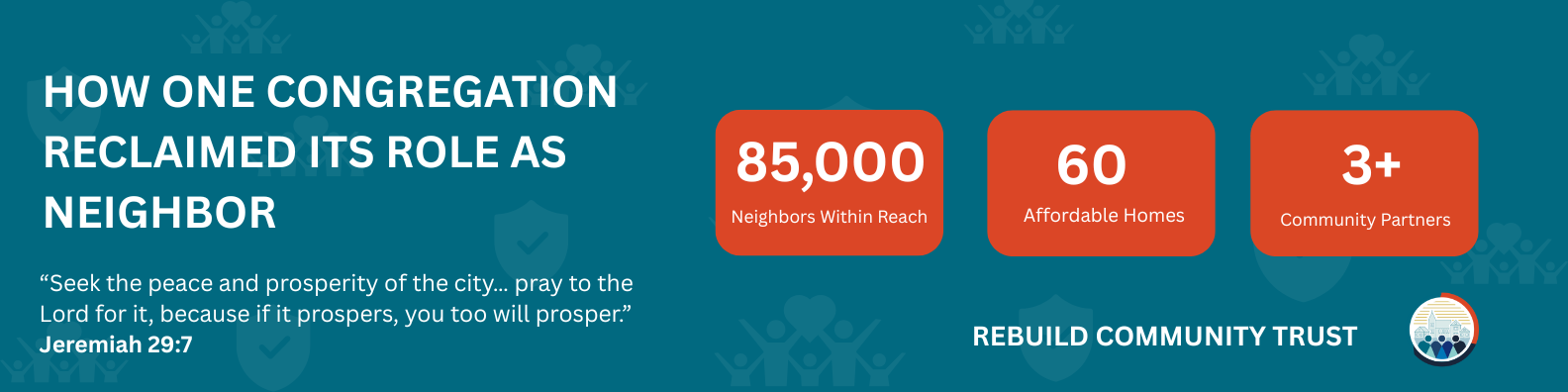
In one of Denver’s most expensive neighborhoods, a local congregation decided to stay put—and make space.
Key Takeaways
- A local Denver church gave part of its land to create 60 deeply affordable homes.
- The church chose presence over expansion, rooted in Isaiah 61:4.
- Partnerships with nonprofits and civic agencies made the vision sustainable.
- This is a model of “staying power” over quick fixes—housing as reconciliation.
- Churches can lead community restoration by listening, stewarding, and staying.
They will rebuild the ancient ruins and restore the places long devastated…” – Isaiah 61:4
A Different Kind of Groundbreaking
There’s something beautiful about watching a church choose to stay. Not just in the “we’re still here on Sundays” kind of way—but in the “we see what’s happening around us, and we’re not going anywhere” kind of way. That’s what Our Savior’s Lutheran Church in Denver is doing. In a neighborhood where home prices have passed a million dollars, this church is giving away part of its land—not for a parking lot, not for a building expansion, but for something deeper. They’re making room for 60 new homes, all deeply affordable, in a part of the city where many families can no longer afford to live. These homes aren’t temporary relief. They’re permanent. And the church isn’t walking away after the land is cleared. They’re staying. They’re showing up. As Pastor Behrens puts it: “This is about how we show up for our neighbors—not just once, but over time.”
What’s Really Being Rebuilt
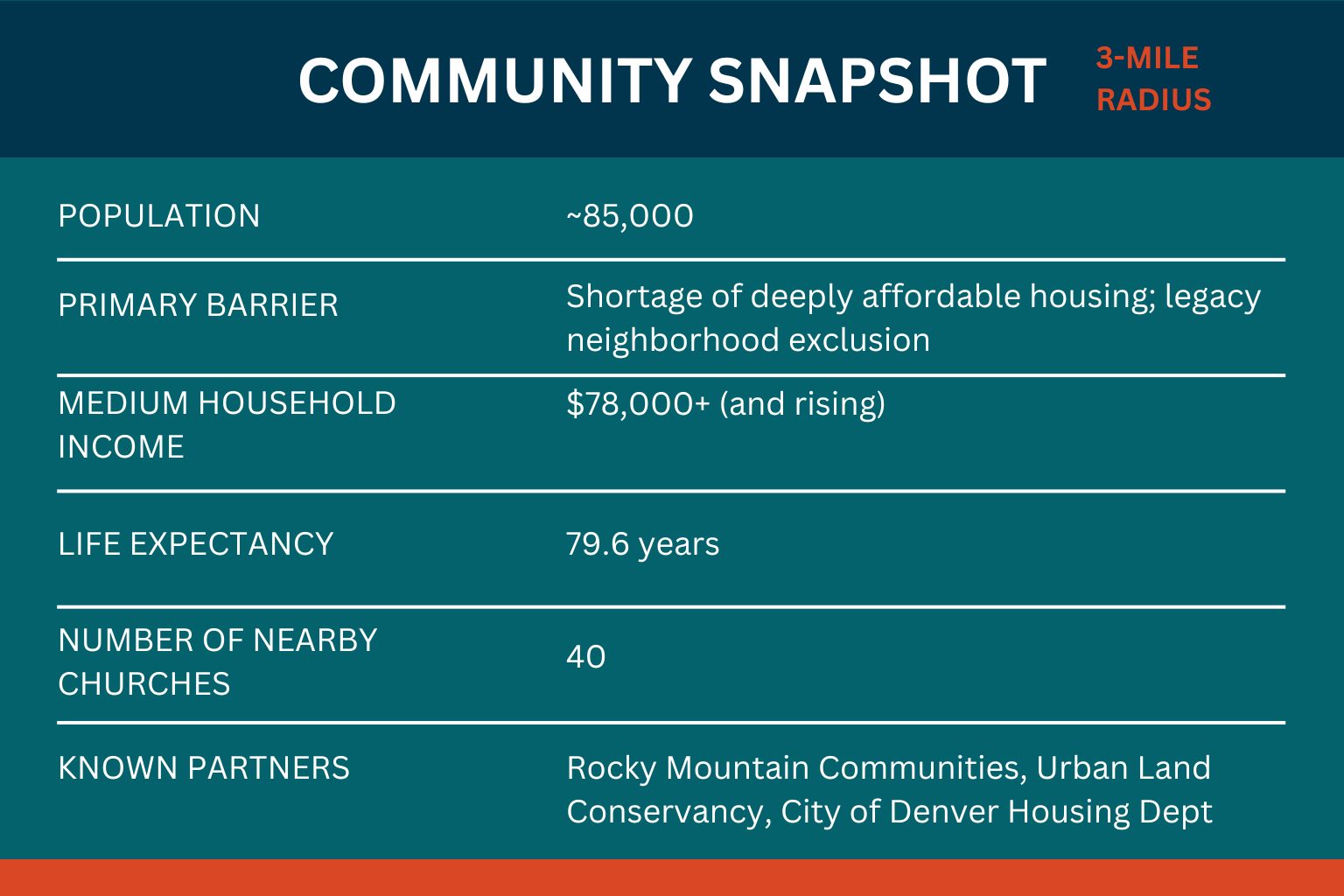
For some churches, the question is: how do we grow? But for Our Savior’s, the question became: how do we give something back? Over the years, the church watched the neighborhood around them change. People moved out. Prices went up. Connections thinned. And somewhere along the way, the story shifted from “this is our neighborhood” to “this used to be our neighborhood.” This project is one way they’re returning to that story—not with loud announcements, but with a quiet kind of courage. By offering their land and staying present, they’re helping repair what’s been frayed between the church and the city, between neighbors and systems, between what was and what could still be. It’s not just about homes. It’s about homecoming.
Let’s discern what rebuilding trust look like in your context
Community Partnership Score: 3.35 – Engaged

Replicate This in Your Church’s Context
5 Practical Steps for Churches Asking, “What Could We Do?”
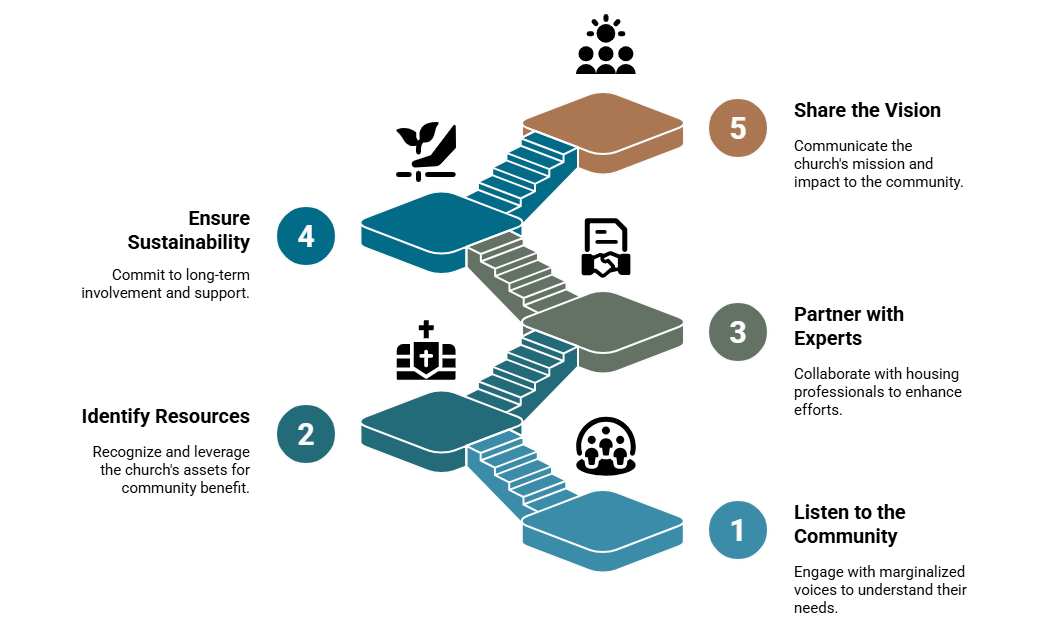
Framework for Replication
- Listen to the Community
Engage with marginalized voices to understand real needs. - Identify Resources
Recognize and leverage your church’s existing assets to benefit the community. - Partner with Experts
Collaborate with professionals—especially in housing and related fields—to strengthen your efforts. - Ensure Sustainability
Commit to long-term support and involvement. Relationships and impact take time. - Share the Vision
Clearly communicate your church’s mission and the impact it’s making. Invite others into the story.
A Final Word: Maybe It’s Time to Stay
There are a hundred reasons churches feel pressure to sell, shrink, or step back. But what if God is inviting us to stay—and stretch? Not just to survive, but to serve in a way that rewrites what the neighborhood thinks is possible? Our Savior’s Lutheran Church didn’t just imagine something better. They acted on it. And in doing so, they’re showing what the Church still has to offer: presence, courage, and the kind of hope that makes space for others. If you’re wondering what this could look like in your community, you don’t have to figure it out alone.
- Download the Community Mapping Playbook to serve your context
- Let’s discern what rebuilding trust might look like in your context
Source: Learn more