
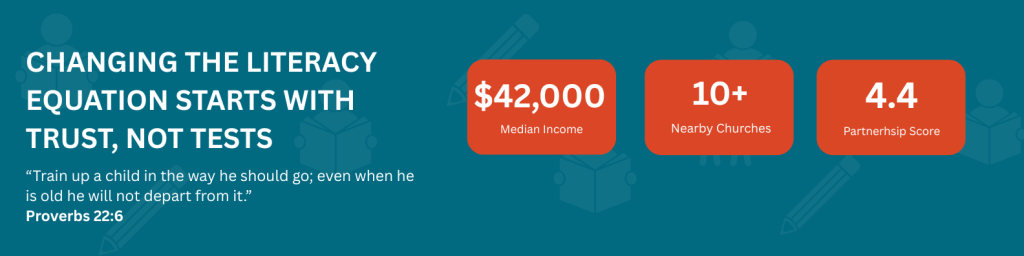
When schools fall short, the church steps in—not with curriculum, but with care.
Key Takeaways
- Black congregations are helping bridge racialized education gaps through relational literacy support.
- These efforts prioritize belonging and representation, not just reading skills.
- Churches are leveraging Sunday school rooms and elders as sacred learning spaces.
- This is a model of slow, trust-based restoration—not flashy programming.
- Partnerships with libraries and local educators can deepen sustainable impact.
“They will rebuild the ancient ruins and restore the places long devastated…” — Isaiah 61:4
A Return to Sacred Storytelling
There’s a quiet story playing out in churches across the country. It’s not about big budgets or formal curriculum. It’s about aunties, uncles, deacons, and Sunday school volunteers leaning in—reading books, affirming young voices, and reminding children that their minds are good and their stories matter. One father said it plainly: “At church, my son shines. But at school, all they see are problems.” That kind of tension isn’t new. Many Black families carry the weight of mistrust in school systems that don’t always see their children clearly. But in the Black church, something different happens. Children are known. Their energy isn’t misunderstood—it’s celebrated. Their words aren’t corrected—they’re welcomed. The reading circle becomes more than a lesson. It becomes a place of restoration.
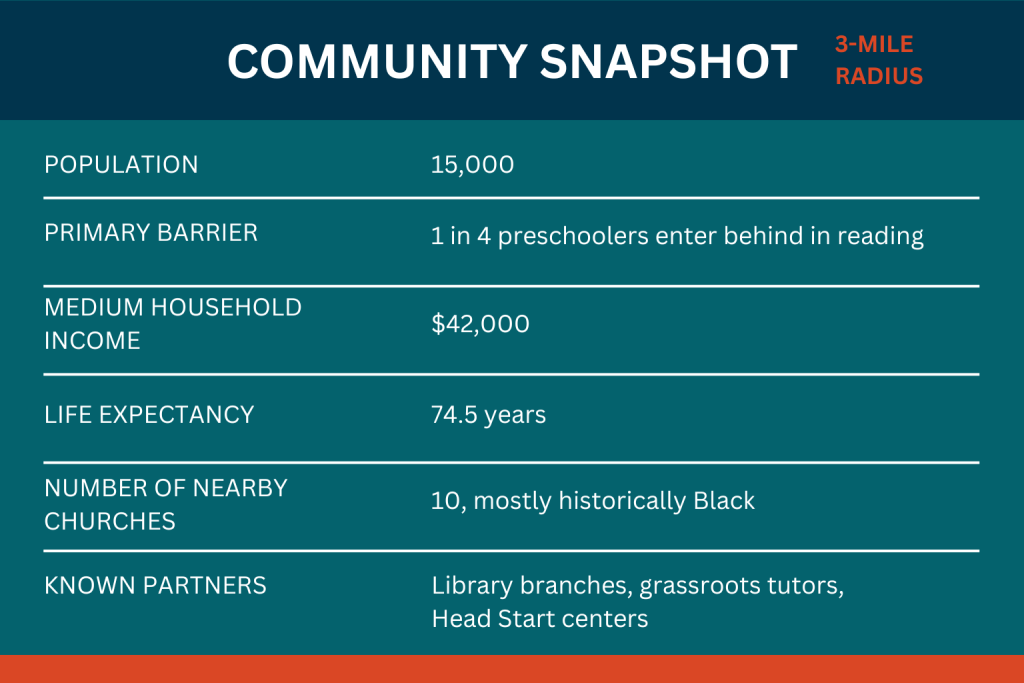
(Reflective of similar urban neighborhoods with racialized education disparities.)
Bridge-Building
This isn’t just a literacy problem—it’s a trust problem. For generations, Black families have had to navigate school systems that misinterpret their culture, language, and children’s behavior. That erosion of trust doesn’t just impact grades—it shapes how young people see themselves and how caregivers engage with schools. But the Black church? It’s long been a place where that trust is protected and restored. Here, the approach isn’t just academic—it’s relational. It’s built on deep knowing. A grandma who reads aloud with warmth. A youth leader who doesn’t rush through story time. A whole community saying with their presence: “We see you. We believe in you.” That’s what reconciliation looks like—slow, steady repair in a world quick to label and dismiss.
Let’s discern what rebuilding trust might look like in your context
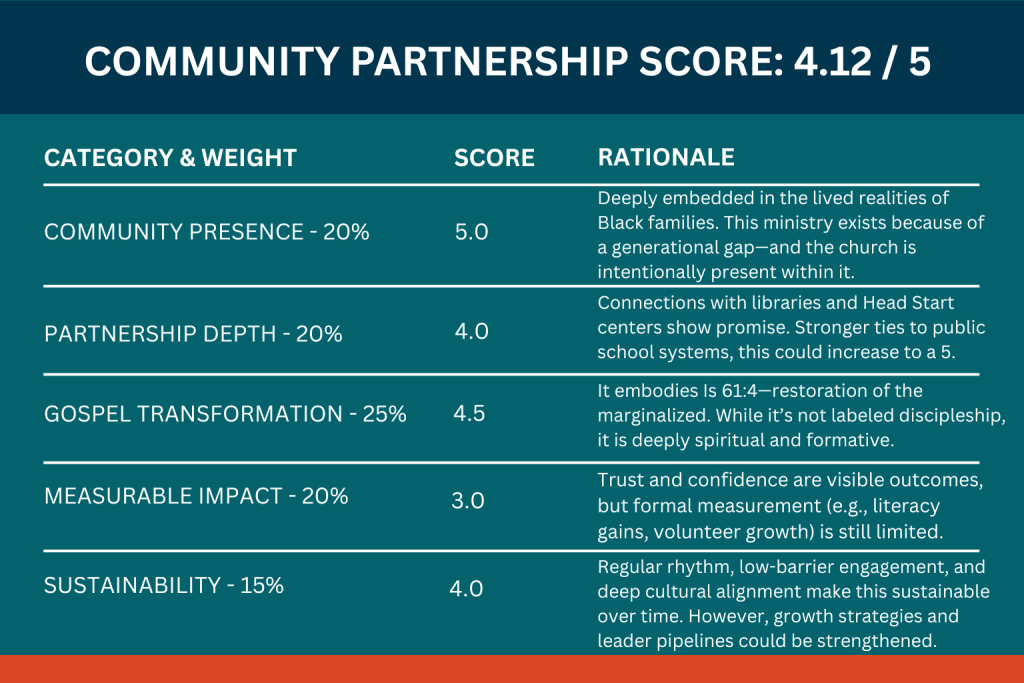
Try this Roadmap
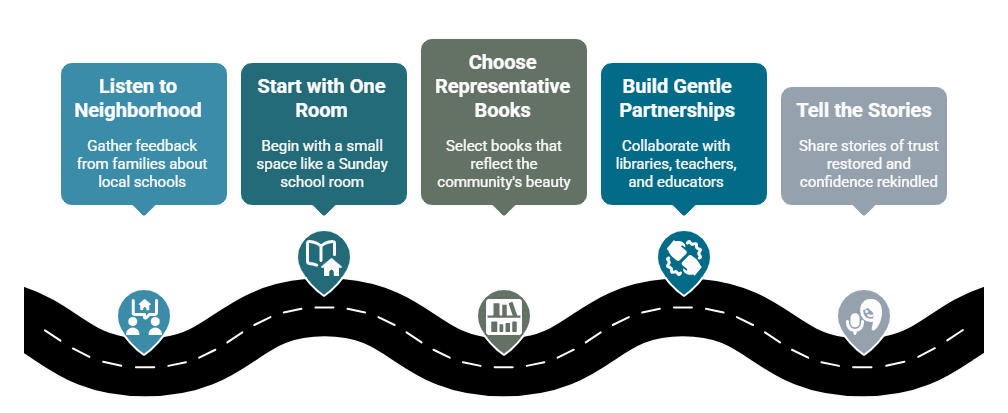
5 Steps for Churches Who Want to Begin
- Listen to your neighborhood – Ask families what’s missing or frustrating in local schools.
- Start with one room and a few readers – Sunday school space is enough.
- Choose books that reflect the beauty of your community – Representation matters.
- Build gentle partnerships – Libraries, teachers, even retired educators in your pews.
- Tell the stories – Not just of books read, but of trust restored and confidence rekindled.
A Final Word: The Church Still Holds the Story
We don’t have to wait for school systems to change in order to start healing what’s been broken. Churches have always been more than places of worship—they’re places of memory, of formation, of beloved community. When we open our doors to read with children, we’re not just helping them decode words. We’re helping them believe in their own brilliance. If you’ve been wondering how your church could do something that matters right now—this is it. Not a new program. A sacred return to what we’ve always done: meet people where they are and love them forward. If you’re wondering what this could look like in your community, you don’t have to figure it out alone.
- Download the Community Mapping Playbook to serve your context
- Let’s discern what rebuilding trust might look like in your context
Source: Learn more